The rabbit impact in Australia
Since arriving in Australia with the First Fleet, then deliberately released for hunting in the 1800s, European rabbits have become Australia’s most widespread and destructive environmental and agricultural vertebrate pest.
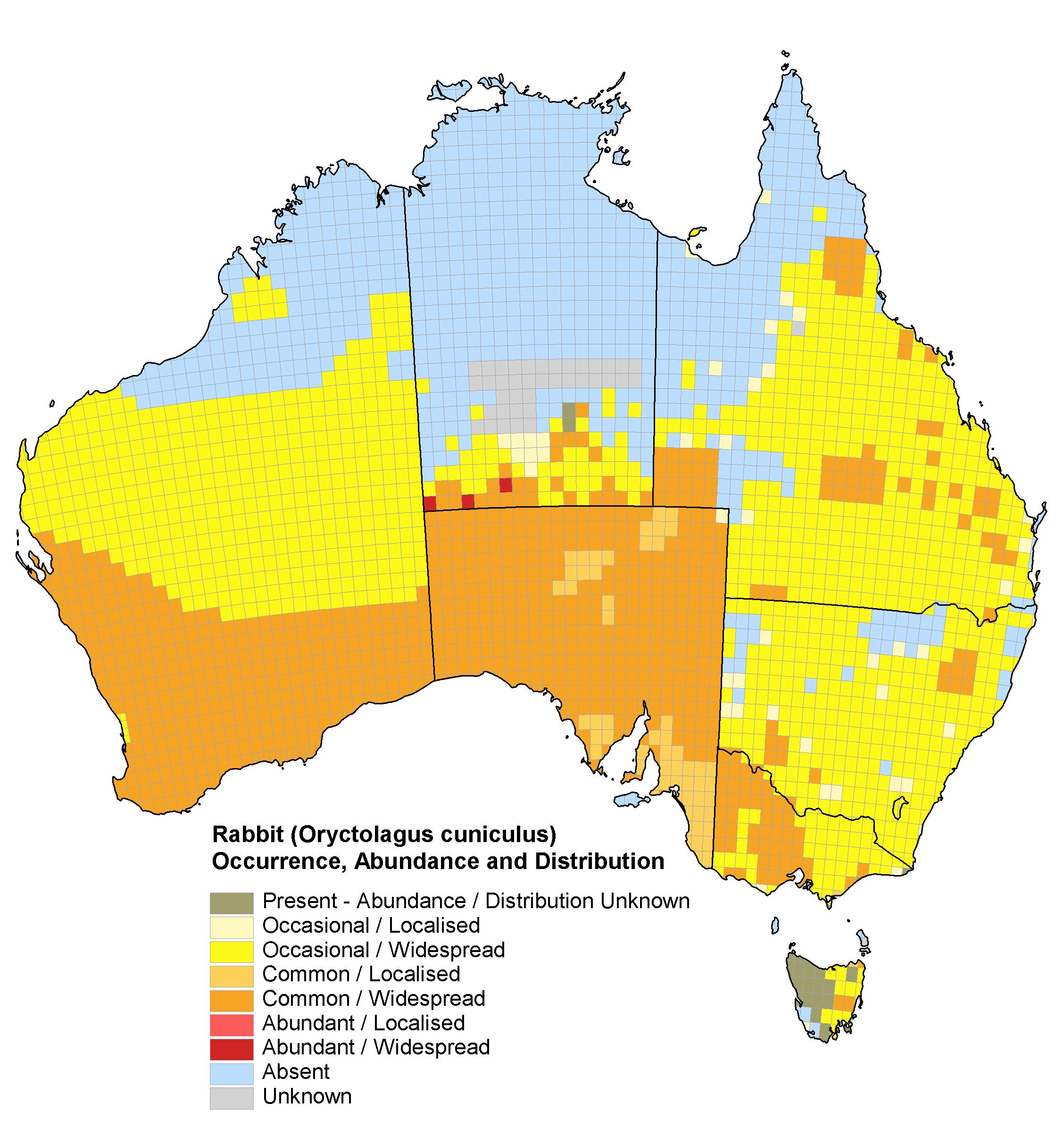
Their rate of spread is the fastest of any colonising mammal anywhere in the world. They are now found in all States and Territories, including several offshore islands.

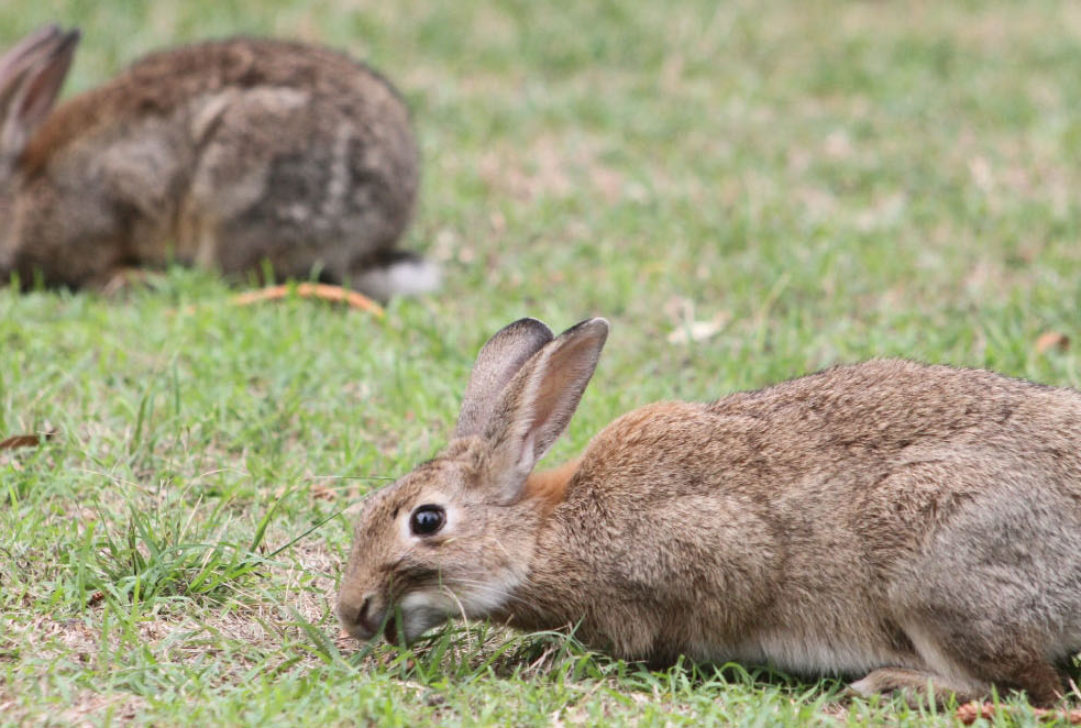
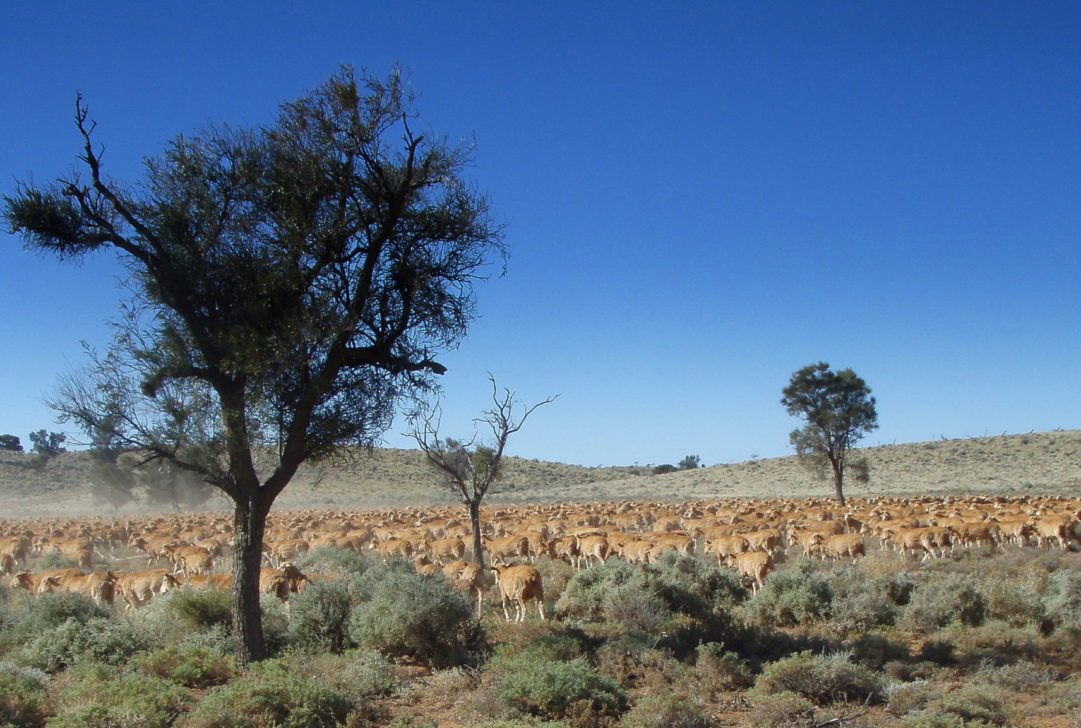
Image by Anne Young
Values impacted
- Environment: European rabbits’ impact on natural environments and native species is a leading threat to biodiversity. Rabbits damage native plants and compete directly with native wildlife for food and shelter. Their digging and browsing leads to a loss of vegetation cover, which in turn can result in slope instability and soil erosion.
- Agricultural production: European rabbits impact agricultural activities by reducing productivity across most enterprises, from forestry and revegetation initiatives through to viticulture, grazing and cropping. Their consumption of green feed prevents seedlings from regenerating and reduces crop yields while also reducing the feed available to livestock. Other impacts stem from their ability to damage infrastructure on both farms and peri-urban properties.
- Community wellbeing: European rabbits create a social toll with evidence of psychological stress and trauma to land managers dealing with rabbit infestations on their properties and members of the public finding sick rabbits. Other primary producers may have concerns about the potential for injury to horses from falling in burrows and warrens. Rabbits can also be a threat to sites of cultural significance to First Nations people as they burrow and disturb landscapes.
Key facts
Original distribution
European rabbits are native to the Iberian Peninsula (Spain & Portugal), France, Gibraltar and north-western Africa (Morocco & Algeria)1.
Current Australian distribution
The rate of spread of the rabbit in Australia is believed to be the fastest of any colonising mammal in the world1.
Domesticated rabbits were first introduced to Australia in 1788. The first feral populations were observed in Tasmania in 1827. Thomas Austin introduced wild rabbits to his property in Geelong, Victoria, for hunting in 1859.
By 1886, rabbits had spread north to New South Wales and Queensland. They were in Western Australia and the Northern Territory by 1900. Their colonisation was aided by existing native animal burrows and habitat modification for farming, and by further deliberate human introductions for meat and hunting.
The construction of a 1700 km rabbit-proof fence in Western Australia failed to stop the spread of rabbits and they are now found across the continent, and on several offshore islands1. Click on the map to see more.

Biology and ecology
Wild European rabbits typically have grey-brown back fur and a white-grey belly. Colour varies from sandy light brown, to ginger, black, and occasionally, white. Rabbits are characterised by their long ears, long hind legs, short fluffy tail and feet that are well furred beneath, with large straight claws. Males and females are similar in size and appearance; male rabbits may have a slightly broader head. Adults weigh 1–2.25 kg and range in length from 35 to 45 cm1.
Habitat
In Australia, rabbits are widely distributed and occur in a variety of habitats, including urban and coastal areas. They prefer low vegetation, well-drained, deep sandy soils and refuge such as scrub, blackberries or fallen logs1. Rabbits construct large warrens up to 3 m deep and 45 m long. Warren complexes are generally larger in more open country. Warrens provide cover and protection from predators and extreme temperatures, and allow rabbits to live in open grasslands, grazed pasture and arid land. Where there is abundant surface cover, rabbits may live above the ground.
What do feral rabbits eat?
Rabbits are herbivores that eat a wide variety of plants, including crops, roots, pastures, young trees and vines2. They can graze plants to ground level and may eat up to one third of their own body weight daily, although their average daily intake is 100–150 g2. In arid areas rabbits need access to water, but elsewhere they get enough moisture from their food.
Rabbits prefer to eat soft, short, succulent plants such as grasses and herbs.
Reproduction and lifecycle
Females can breed at any time of the year if there is sufficient feed available. The main breeding season is determined by rainfall and the early growth of high-protein plants. During this time, wild rabbits form territorial groups containing 1–3 males and 7–10 females, led by a dominant pair. Wild rabbits can begin breeding at four months old and may produce five or more litters in a year, with up to five young per litter. In less favourable conditions they can still produce one or two litters each year2.
Rabbits have a gestation time of 28–30 days. Young are born blind and hairless and open their eyes after 7–10 days. They emerge from the warren weaned at about 18 days and leave the nest at 23–25 days. Survival of young varies between years and with seasonal conditions and also depends on the incidence of diseases. Wild rabbits rarely survive past six years of age1.
To learn more, find resources and publications about European rabbits available under the Plan, Manage and Improve sections on the right.
Quick guide to managing rabbits
The Centre for Invasive Species Solutions has produced glovebox guides, planning guides, and field guides for many pest animals, including rabbits. These are useful resources for learning about rabbit management or promoting best practice rabbit information at events and field days.
To enhance your knowledge when creating your pest animal programs, visit the Plan, Manage and Improve sections.
Glovebox Guide for Managing Rabbits
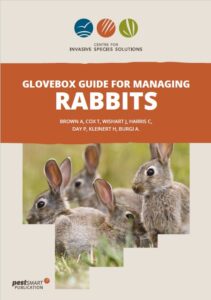
For a quick and easy digest guide to managing rabbits, take a look at the Glovebox Guide for Managing Rabbits. Click the artwork below to download and print it for free.
Working with your community
If you need larger quantities for an event or a local community program you can place an order here. We can even add your organisation’s logo to the cover. Please note that printing and postage costs will apply in most situations.
Watch now
To introduce you to rabbit management, we have collated a selection of how-to videos as well as conferences, and presentations on our YouTube channel. Find a sample below.
Explore videos and more
15 videos found
08:21
Rabbit impacts | Better rabbit management in Tasmania
03:07
Genetic resistance, immunity and transmission of rabbit biocontrol

4:01
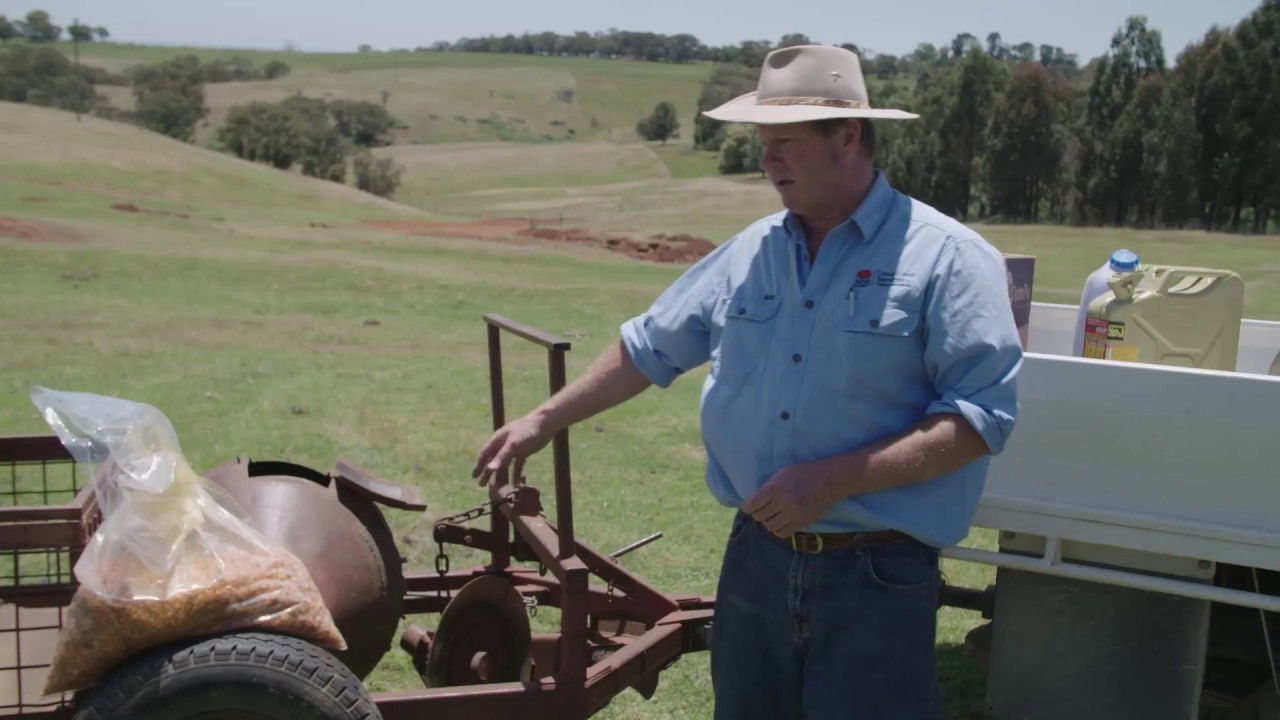
Poison Baiting for Rabbit Control
02:25
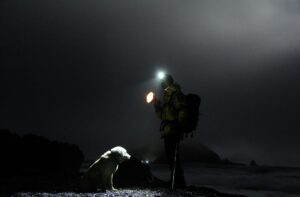
Spotlighting for pest animals
04:01
Poison Baiting for Rabbit Control
06:00
Map and monitor rabbits | RabbitScan
16:04
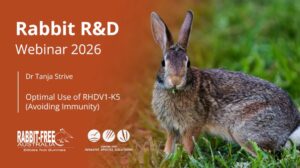
Optimal use of RHDV1-K5 and avoiding immunity | Rabbit R&D Webinar 2026

3:43
How to collect samples from a dead rabbit for disease testing

2:47
How to submit rabbit disease data into RabbitScan
02:50
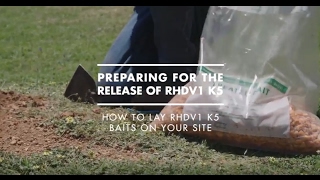
How to lay RHDV (rabbit virus) baits on your site
Monitor rabbits with RabbitScan
RabbitScan is a free resource for landholders, Landcare groups, community groups, local Councils, professional pest controllers and biosecurity groups. It allows you to map and monitor European rabbits, record local rabbit impacts and document where control has been undertaken or needs to be undertaken. It is a great planning tool for individuals and groups planning a rabbit management.
You can also record any dead rabbits you find, and submit samples for testing: report a rabbit disease. Where do I find RabbitScan?
You can access RabbitScan via www.rabbitscan.org.au or download the ‘FeralScan’ App and follow the rabbit prompts.
Privacy
RabbitScan is a series of apps under FeralScan. FeralScan is committed to protecting users’ data, location and information, will all data managed securely and discreetly as described in our privacy policy.